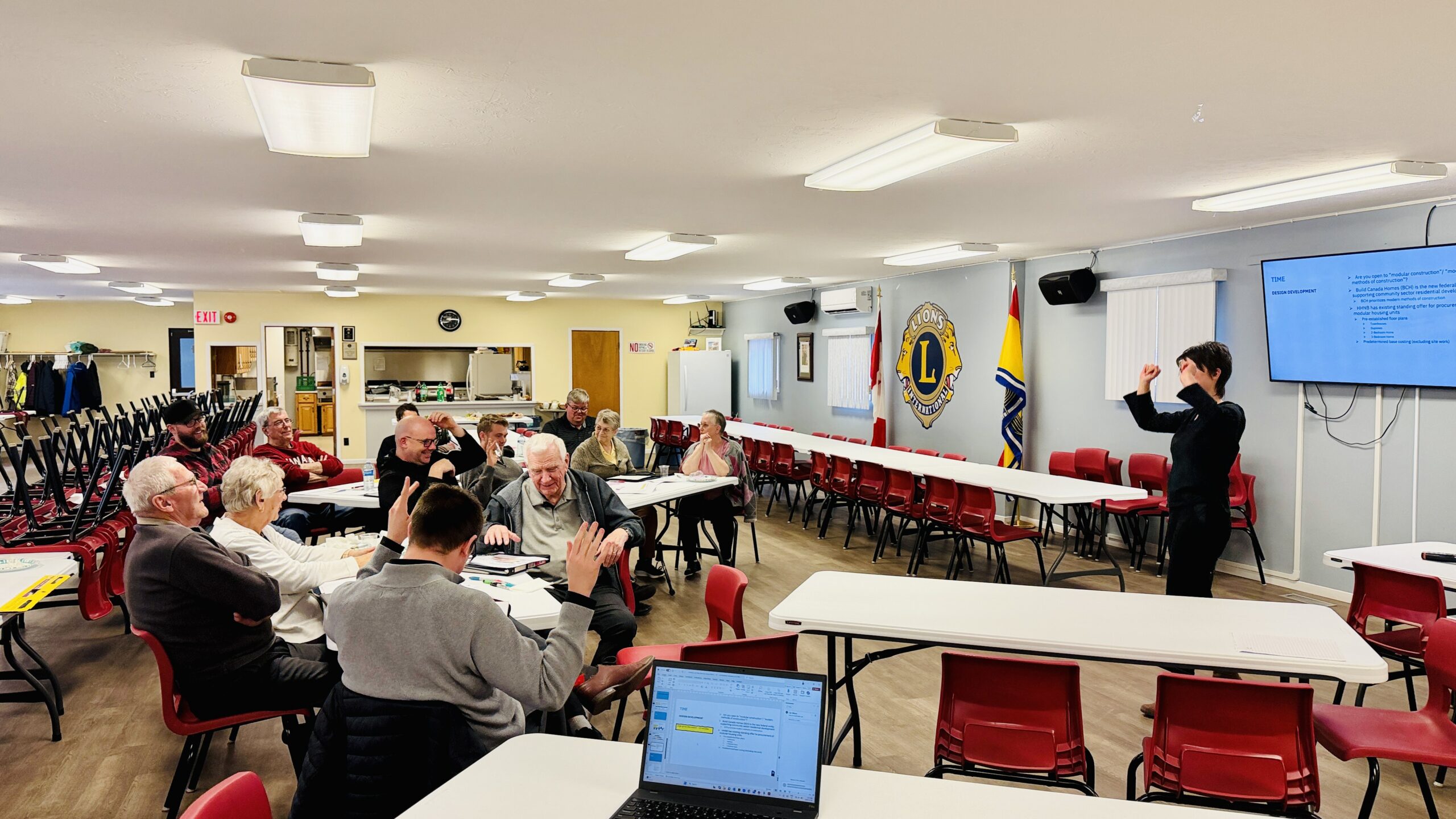
The COVID-19 pandemic taught us that housing is not just a social issue—it represents critical infrastructure for our province. Access to adequate housing for all segments of our population is essential to workforce stability, community sustainability, and economic resilience.
While housing development has increased significantly in recent years, it has not addressed the need for more non-market or community housing in New Brunswick. This need is great and continues to grow.
The Housing Hub was created in 2022 to help remove one of the most significant barriers to expanding the community housing supply: development capacity. Working closely with both the government organizations that fund community housing and the mission-driven organizations that operate it, we are helping to build a better future for New Brunswick, one home at a time.
What Is Community Housing?
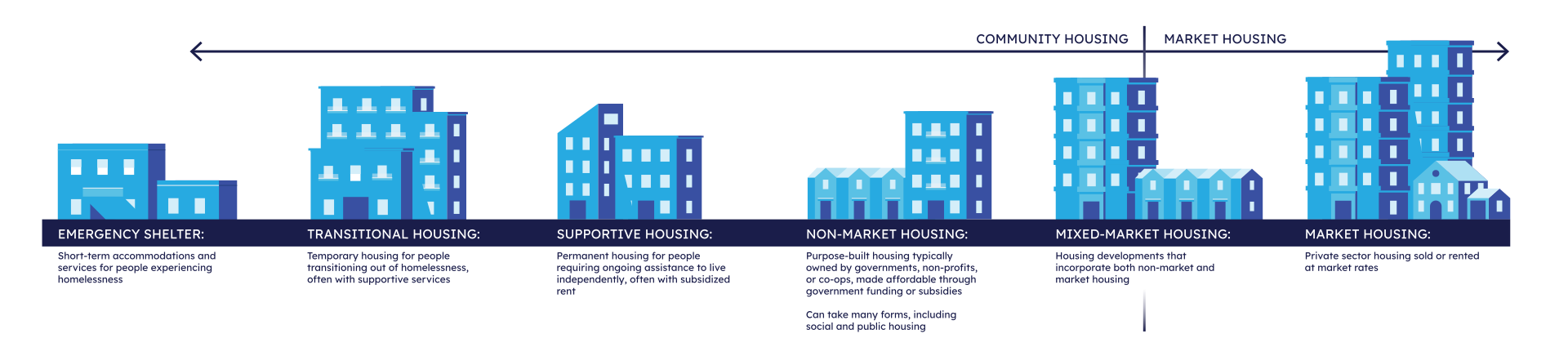
Community housing encompasses a large part of the housing continuum. It can include transitional housing, supportive housing, public housing, co-operative housing, and more. It can also be incorporated into a mixed-market housing development.
Community housing exists to provide housing security to people who, for whatever reason, can’t afford market rental rates. Because rental rates for community housing are not determined by market forces, community housing can also be known as non-market housing. This housing is typically owned and operated by government, non-profit housing organizations, housing co-operatives, or similar mission-driven organizations.
Community housing can be designed to serve individuals transitioning out of homelessness; working families who are struggling to make ends meet; newcomers who are searching for work in their field of expertise; seniors who are trying to get by on a fixed income—and more.
While community housing can take many forms, every community housing development has one thing in common: a social purpose that prioritizes affordability and stability over profit. Community housing is an investment in the community rather than in the wealth of company shareholders.
What Community Housing Looks Like
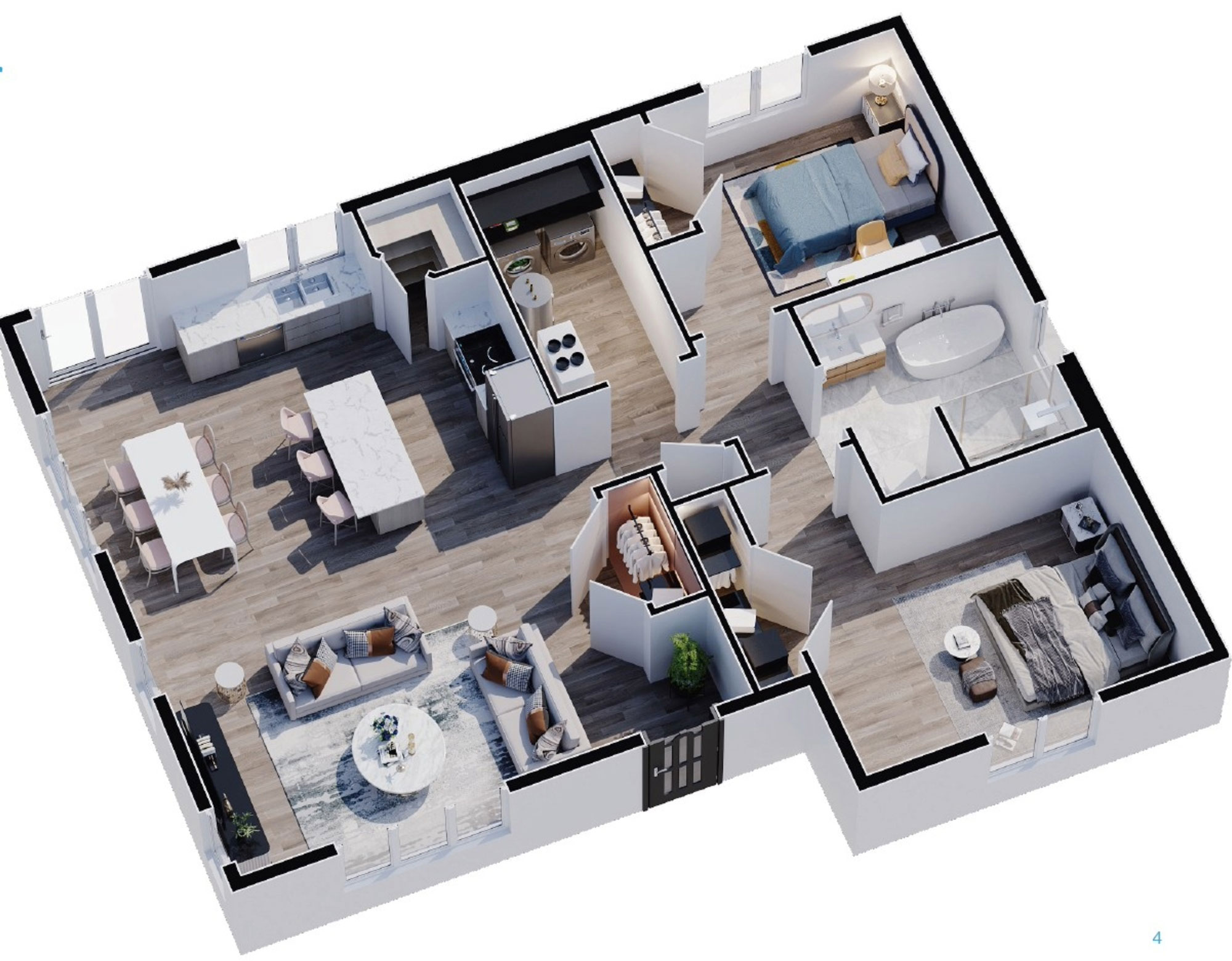
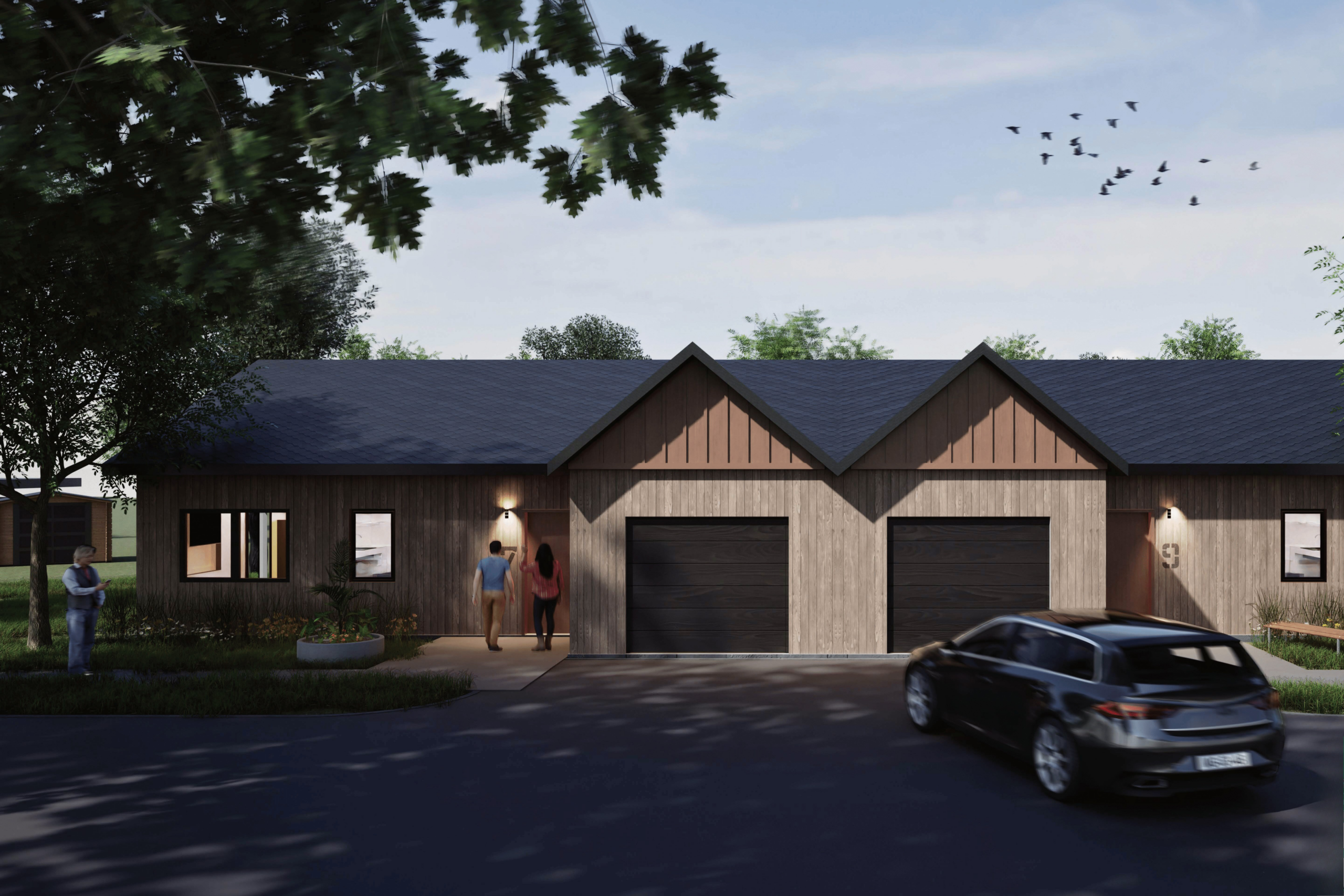
Community housing is all around us, but you may not know it. It can look like an apartment, a duplex, or a single-family home. It isn’t the state of the housing that makes it accessible to lower-income residents; it is the fact that the rent isn’t tied to market forces.
We build community housing to the same standards as market housing. We can design it to fit in with the surrounding neighbourhood. Or we can integrate it seamlessly into a new mixed-market development.
Community housing only serves its purpose when it is safe and in good repair. We ensure that our clients have the mandate and the capacity to properly maintain the housing we help them create.

Why Community Housing Matters
Communities and economies thrive when their populations are thriving. And people can only thrive when they have a safe and affordable place to live.
Access to safe, stable, and affordable housing is the foundation of healthy and sustainable communities. However, non-market housing currently makes up less than 4% of Canada’s housing stock. According to the National Housing Council, we need to at least double the share of non-market housing over the next decade to restore affordability to Canada’s housing market.
A 2023 study by the Canadian Housing and Renewal Association (CHRA) found that bringing Canada’s community housing stock to these levels by 2030 would increase GDP by $67–136 billion and significantly boost economic productivity. The CHRA estimates that economic gains from having more community housing would outweigh the costs within two years of meeting the target.
“Community housing is more than a social good—it’s an economic necessity”
The Impact of Community Housing on Productivity
Read the report
The Need for Community Housing in NB
The need for community housing is growing in New Brunswick, like in the rest of Canada. And we anticipate that this need will continue to grow for the foreseeable future.
While the pandemic is behind us, New Brunswick continues to wrestle with high rents and home prices, stagnant wages, a shifting population, and historically low vacancy rates, combined with new forms of economic uncertainty. These trends are felt even more intensely in rural New Brunswick, which makes up a large portion of our province.
The number of market housing developments in New Brunswick has increased significantly in recent years in response to market demand, but these developments don’t respond to the needs of those who can’t afford market rents. In fact, upward pressure on housing prices and the focus on constructing higher-end units has significantly decreased the proportion of properties that are affordable to low- and middle-income households.
Even if for-profit housing development slows down in response to slowing population growth and decreased demand, we expect the need for community housing to keep growing.
The New Brunswick Housing Crisis at a Glance
- From 2020 to 2024, house prices increased by 67% and rent increased by 37%, while household incomes only increased by 14%.
- In 2022, over 31,000 NB households were living in housing that was unaffordable, too small for their needs, or in poor condition.
- In 2025, there were over 13,000 households on the waitlist for public housing. The provincial housing waitlist has grown by 1,500 households each year since 2020.
- In 2025, there were at least 1,050 people in NB experiencing chronic homelessness.

A Collaborative Approach to Community Housing Solutions
Addressing the housing crisis in New Brunswick requires collaboration and alignment between the government bodies that fund community housing, the organizations that operate it, and the communities that need it.
As a community housing development consultant, the Housing Hub is in a unique position to bridge the gaps between these groups. With strong connections to funders, policy-makers, advocates, operators, and community housing tenants, we are helping pave the way for long-term change by promoting improved coordination across the community housing ecosystem.
In September 2025, the Housing Hub formalized its partnership with three other like-minded organizations to form the New Brunswick Community Housing Alliance.
As an Alliance, we are committed to leveraging our collective strengths and resources to advance the development of safe, inclusive, sustainable, at-cost housing across the province.
The Housing Hub as a Capacity Builder
Canada relies heavily on non-profit organizations, housing co-operatives, and other mission-driven organizations to fill gaps in the housing continuum. But these organizations have a mandate to operate community housing, not build it.
That’s where the Housing Hub comes in: We provide the capacity and expertise that community housing providers and local governments often lack when it comes to developing new community housing projects.
And we don’t just help create more community housing. We work with our clients and partners to ensure that the land we build on and the housing we develop will remain affordable in perpetuity.
- We believe that when we invest in housing, we are investing in people—in dignity, health, opportunity, and the long-term prosperity of New Brunswick.